


Gambling Law Updates Shake Up the UK Casino Scene in 2025
Therefore, a general shift in the economic model of remote gambling away from a reliance on a high spending minority is likely desirable to achieve the government’s objectives and create a more sustainable industry. A recent survey of UK gamblers estimated that moderate-risk and problem gamblers (collectively comprising 14.1% of the sample population) accounted for 43.5% of overall gambling spend but more for certain product types. In addition to submissions to the call for evidence, we also received advice from the Gambling Commission, which emphasised the importance of measures to prevent harm throughout the remote customer journey, and committed to build on recent work to improve protections.

Slot Stake Limits
We do not propose that staff alerts are required for Category D machines that accept direct debit card payments. However, we think that this is an important tool that staff could use to monitor players and therefore, it should be a feature on Category B and C machines accepting cashless payments. In line with our approach to voluntary limit setting, we do not propose that Category D machines will be required to have mandatory limits for time and monetary thresholds.
We intend to take a similar approach by giving the Gambling Commission the power to apply to court for such an order and use these powers to disrupt illegal gambling operators. In the most serious instances of non-compliance or risks of harm, Ofcom will also have the power to apply to the courts for “business disruption measures”. The Gambling Commission, as well as evidence from the Review, has shown that unlicensed sites pose an increased risk to the most vulnerable consumers. The black market is relatively easy for people to access who are actively trying to find and gamble with illegal operators online. From the limited evidence that is available, we would assume that the size of the black market does not currently account for more than 2.5% of remote gambling that takes place in Great Britain. The Danish Gambling Authority’s 2022 Report on illegal gambling estimates that the online gambling channelisation rate (the percentage of all gambling that takes place legally) is 98% in Great Britain and therefore the black market accounts for 2% of online gambling.
With non gamestop casino increased resources in due course, the Commission plans to invest in its data systems in order to better understand consumer behaviour and operator compliance. It is supported by existing powers in the Gambling Act for the Commission to make data requests as part of its regulatory activities. It has indicated, including in a speech by its Chief Executive to the GambleAware conference in 2021, that repeated failings are an aggravating factor and tougher action will be taken against repeat offenders.
We conclude that the 80/20 rule on gaming machines in arcades and bingo clubs is no longer required to offer the customer protections originally intended, and does not provide a workable framework for operators to make commercial decisions. The bingo trade organisation provided evidence of consumer demand for Category B gaming machines in venues, over and above Category C and D machines, particularly during the short breaks in the main stage bingo game. Currently, no more than 20% of the total number of gaming machines in licensed bingo premises and adult gaming centres are allowed to be Category B machines (known as the ‘80/20 rule’). If Parliamentary time allows, we would also consider making changes to allow trials of linked machines in venues other than individual casinos, and to permit the rollout of linked machines more generally (e.g. after a trial has taken place and the data analysed). The Commission also raised concerns that linked machines could encourage riskier gambling behaviour and be of concern for vulnerable customers, and that such proposals would need to be more fully explored. We will require any new or additional requirements for operators in relation to cashless payments on gaming machines to be in place before the prohibition is lifted.
Licensing and compliance for remote operators
Energy costs per machine will be estimated in the final stage impact assessment using an energy calculator. A more detailed estimate of the impact for each option will be presented in the final stage impact assessment, once further data has been collected. This increase is expected to be higher under Option 1 than Option 2, as operators will not be restricted by device constraints. Data on net expenditure per session shows that from April to September 2019, the vast majority of sessions across all machine categories ended in the player either winning money or losing up to £20. A ‘mixed session’ is a single session that takes place on games of different machine categories. Unlike Option 1, it would be much more difficult for an operator to increase the number of B3 cabinets on their premises by increasing the number of Category C or D in-fills and tablets that they site.
The commitment made in 2020 by four major operators to direct increased contributions to the independent charity GambleAware, including a cumulative £100 million for treatment services, will continue to be delivered in full to provide funding certainty and support the delivery of planned programmes of work. When Parliamentary time allows, we will seek to further tackle illegal online operators by legislating to give the Commission powers to require for example internet service providers (ISPs) and payment providers to stop providing their services to black market websites. We are challenging the sports and esports sectors and the industry to set a high standard for social responsibility, with the potential not only to improve standards in gambling sponsorship but also to provide a model for responsible sponsorship by other sectors. We will engage with video games stakeholders such as industry bodies, tournament organisers, and publishers of popular esports games to develop and implement ground rules, for example potentially limiting gambling sponsorship in competitions that are accessible to under 18s. Options might include individual sports governing bodies’ rulebooks incorporating the Code’s provisions or through inclusion in the gambling industry’s IGRG Code.
Checks will happen in the background against information already available online, so those who are checked will not notice. Betting companies will be required to conduct seamless player protection checks on the highest spending gamblers to check they’re not incurring harmful losses. A new stake limit for online slots will be introduced with the default maximum stake of between £2 and £15 per spin, subject to consultation. The rate will be subject to further consultation, which will take into account factors such as business size, operating costs and problem gambling rates.

Industry submissions put forward a range of proposals for changes to the rules that could allow the sector to develop and thus support the Review’s objective of ensuring the regulatory landscape for land-based gambling reflected changes since 2005. The Act embedded a principle that gambling should generally take place in gambling-specific premises as opposed to places where it would be incidental to the establishment’s primary purpose, such as cafes or taxi offices. The fees must be set on a cost recovery basis to cover the cost of administration and enforcement (e.g. inspections), and are therefore essential to ensure that licensing authorities can properly regulate gambling in their areas. Scottish Ministers also have the power to set application and annual fees for premises licences, which differ from the fees set out for England and Wales, set out in the Gambling (Premises Licence Fees) (Scotland) Regulations 2007.
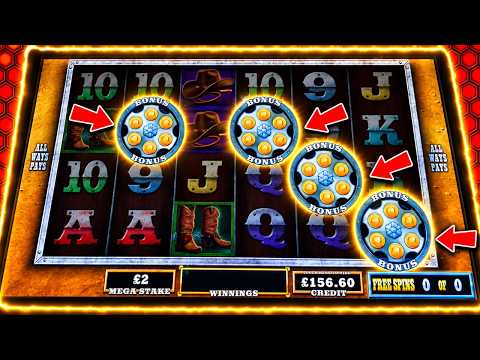
We will modernise the rules for land-based gambling and make sure that all gambling, be it online or offline, is overseen by a beefed up, better funded and more proactive Gambling Commission which can make full use of technology and data to keep abreast of the industry. Looking ahead, the UK faces a number of challenges in regulating the casino industry, including the rise of online gambling, concerns about problem gambling, and the need to adapt to rapidly changing technologies. Similar to standard slot games or fruit machines available only in the highly regulated environment of casinos, FOBTs are also offered in betting shops and at tracks with pool betting. In general, there are no separate laws for remote gambling; online casinos must follow the same rules and regulations established for land-based establishments in the Gambling Act 2005. The Gambling Commission regulates not only land-based casinos and gambling premises but also the entire remote gambling sector.

1968 Act casinos will be entitled to an enhanced gaming machine entitlement if their gambling area is at least 280sqm. 1968 Act casinos with a gambling area of at least 280sqm will be able to exercise the increased gaming machine entitlements shown in Figure 3. For example, a casino with two premises licences that meets the size and physical separation requirements could site 160 machines – more than a Large 2005 Act casino. Where 1968 Act casinos are smaller than these requirements, we have proposed that they are able to benefit from an increased number of machines on a pro rata basis commensurate with their size and non-gambling area, and subject to the same ratio. The number of gaming products that land-based casinos can provide will always be constrained by physical space in a way that online casinos are not, but this is made worse by the existing caps on numbers.
The cross-industry submission from the Cashless Group cited evidence of technological change and developments in consumer behaviour over recent years to support its argument that enabling cashless payments would meet consumer expectations. If a wider range of games were to be permitted, limits would need to be set on the total number of automated machines to minimise the impact of this change. They propose that new games would be subject to the same player protection measures applied to existing play in casinos. Betting is currently only permitted in 2005 Act casinos, which were intended to offer a wider variety of products as part of the destination casino model. Travel restrictions in the UK and overseas have compounded the impact of COVID-related closures for the high-end casinos, which competes with jurisdictions such as Monaco, Singapore and Macau rather than mainstream British venues.

What measures, if any, do you think venues should adopt to ensure that no under-18s play on ‘cash-out’ Category D slot-style machines if the age limit is introduced? Should ‘cash-out’ Category D slot-style machines be required to move to age-restricted areas in venues? Should the government introduce an age limit on ‘cash-out’ Category D slot-style machines to 18 and over? This does not distinguish between ‘cash-out’ and ‘ticket-out’ machines. The survey found that in the last 12 months, 3% of respondents had spent their own money on fruit or slot machines and a total of 6% had experience of playing on fruit or slot machines.
The white paper indicated that we would expect industry to strictly adhere to this ratio and we would set out detailed requirements in further consultation. We welcome further evidence on the unmet consumer demand in the consultation response. A number of premises, particularly those located in motorway service stations, chose to retain their existing entitlements. Please explain your answer, including an alternative proposal for SSBT entitlements where applicable. Do you agree with the proposed entitlements for Self-Service Betting Terminals (SSBTs) based on the sliding scale? Casinos that are currently permitted to offer betting may site a maximum of 40 Self-Service Betting Terminals (SSBTs).
Casino Games
Credit cards cannot be used for any form of UK gambling (remote or land-based), except for non-remote lotteries. For guidance on a specific dispute with a casino or betting operator, consult a qualified solicitor. Details on the process are available directly from the Gambling Commission at its official ADR guidance page (gamblingcommission.gov.uk). The Gambling Commission has explicitly stated that clauses allowing casinos to void winnings “at their discretion” are likely unenforceable under UK consumer law. If you request a reduction and the casino delays, that is a breach of its licence conditions and a valid basis for a formal complaint. A two-tier financial risk framework now applies to all UKGC-licensed casino accounts.
Is playing online casino games legal in the United Kingdom? We are experts in various games, including online slots, blackjack, and roulette. Discover a wide range of games, the most popular slots, and slot machines with the highest RTP. Whether you’re after a trusted UK casino site for slots and live games, or looking for a great land-based casino near you, we’ve got you covered. Looking for the best casino in the UK — online or on the high street?
- In order to limit the facility to offer credit to overseas customers, we propose to remove the prohibition only in respect of customers not resident in the UK.
- It will not be possible for a licensee to rely on an ancillary remote betting licence, even where the SSBT offer is alongside a non-remote offer as the ancillary licence is bound to a betting premises licence.
- It also advised that increased entitlements should only go to 1968 Act sites meeting the same overall gaming/non-gaming space requirements as 2005 Act Small premises.
- Several submissions raised concerns that if gambling sponsors were banned it would reduce the competitiveness of the sponsorship market.
- An example of a wholly automated gaming table is an automatic roulette wheel into which the ball is inserted not by a human dealer but at regular intervals by the mechanism itself, and bets are placed at touch screen terminals.
This entitlement will not be restricted by any space requirements or whether the casino has decided to increase its number of gaming machines under the new regime. Moreover, this measure would bring greater consistency to the different licensing regimes and bring greater parity between the online and land-based casinos. We do not currently have sufficient data to estimate the likely uptake of additional machines by casinos. Finally player protections are in place in casinos to mitigate increased risks of gambling harms. We can also analyse average loss and session length data to consider the possible risks of gambling harm for those customers who increase their gambling participation as a result of these measures.
The proposal to offer up unused casino licences for reallocation has the potential to bring economic benefits to communities where a casino would add value to their area as a destination. Some licences within permitted areas remain dormant as operators do not consider that there is sufficient demand. The proposal is also expected to lead to casino experiences being more in line with international gaming jurisdictions, potentially elevating the reputation of Great Britain as a gaming destination for international tourists. The proposal is expected to contribute to customer enjoyment by better matching the demand and supply of machines, and to player protection by encouraging players to take breaks in the knowledge that it is much more likely a machine will be available if they want to return. While significant changes can be made through secondary legislation, we may also consider whether changes are required to simplify the system of casino licences, when Parliamentary time allows. The Gambling Commission’s review of gaming machine technical standards will be relevant here and is described in more detail in the following section.
This includes lotteries, betting on sports and horse races, bingo, as well as gaming machines at pubs and land-based casinos. We do not see this as being an issue for operators or manufacturers as it is already widely available on Category B gaming machines within all land-based gambling premises. While it is acknowledged that the risk of gambling harm may increase somewhat following a transition to 50/50, the stipulation outlined in Option 2 would ensure that operators offer a balance of higher and lower stake gaming machines.

The Gambling Commission (UKGC) was created under the Gambling Act 2005 and assumed authority over all commercial gambling in the UK in 2007. Casino Club Port Talbot in Wales is believed to have been the first legal casino in the UK. Gambling first came under state regulation in the 1400s, when authorities restricted betting on horse races and other sports to the nobility, while the poor were limited to dice games. Gambling has been a part of British culture for centuries and nowadays, nearly all forms of gambling are legal and fully regulated across the United Kingdom.
